Melanotan 1 Peptide
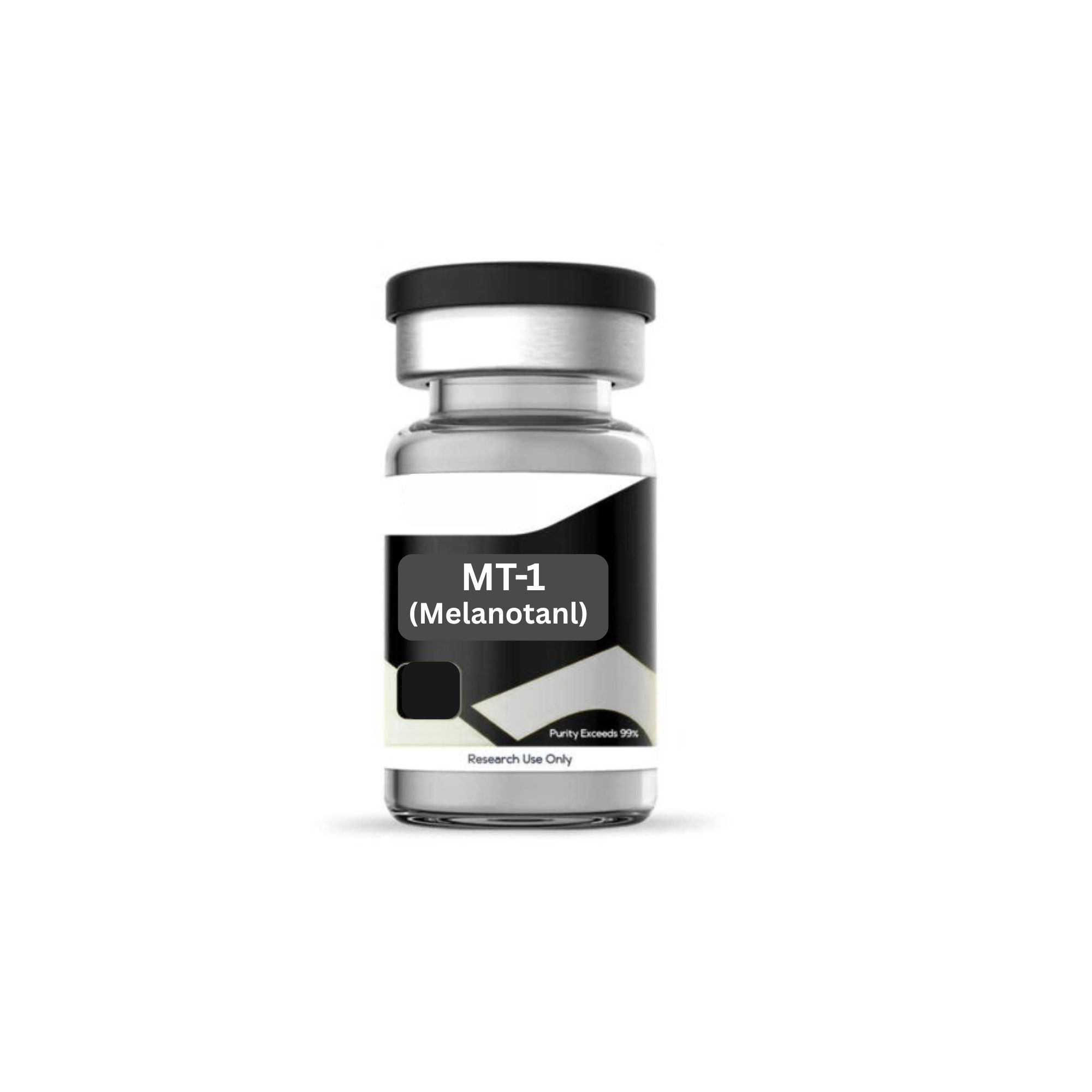
Melanotan I or MT-1 is a synthetic analog of the naturally occurring alpha-melanocyte-stimulating hormone (α-MSH). This peptide belongs to the melanocortin family and is primarily known for its role in stimulating melanin production in the skin. Melanin is the pigment that gives color to your skin, hair, and eyes. It also helps protect your skin from ultraviolet (UV) rays.
MT-1 was originally developed as a potential therapeutic agent for conditions like erythropoietic protoporphyria (EPP) and other photosensitivity disorders, where increased melanin production could reduce UV-induced damage.
Peptide Sequence (IUPAC Condensed): Ac-Ser-Tyr-Ser -Nle-Glu -His-D-Phe-Arg-Trp-Gly-Lys- Pro-Val-NH2
Molecular Formula: C78H111N21O19
Molecular Weight: 1646.8 g/mol
Synonyms: Melanotan 1, MT-1
How Does Melanotan 1 Peptide Work?
Melanotan I works by mimicking alpha-melanocyte-stimulating hormone (α-MSH). It attaches to melanocortin 1 receptors (MC1R) on melanocytes, which are the cells that produce melanin. This action starts a key process called the cyclic adenosine monophosphate (cAMP) pathway, essential for making melanin. As a result, the body produces eumelanin, a darker type of melanin that also protects against UV radiation.
Research on Melanotan 1 Peptide?
Increased Skin Pigmentation / Sunless Tanning: Research on Melanotan-1 (MT-1) has shown it enhances skin pigmentation by stimulating melanin production, leading to a tanning effect. Clinical trials demonstrated that MT-1, combined with UV-B light or sunlight, significantly increased tanning while reducing sunburn cells (1).
Studies demonstrated that higher doses produced more pronounced and longer-lasting pigmentation compared to sunlight alone. Side effects were minor, including nausea and facial flushing. While MT-1 shows promise for safe tanning, concerns about unregulated products and long-term health effects warrant further investigation (2).
Photoprotection and Sun-Sensitivity Treatment: Research has demonstrated that Melanotan-1 provides photoprotection and treats sun sensitivity by stimulating eumelanin production through melanocortin-1 receptor activation. It is particularly effective for erythropoietic protoporphyria (EPP), a condition causing severe phototoxicity (3).
Clinical studies show afamelanotide significantly increases sunlight tolerance, reduces pain from light exposure, and improves quality of life for EPP patients. Administered subcutaneously, it enhances pain-free time in sunlight and is well-tolerated, with minor side effects like headache and nausea (4).
Promising Therapies for Skin Conditions: Research suggests that Melanotan-1 shows promise as a therapy for skin conditions like vitiligo by stimulating melanogenesis and promoting repigmentation. Vitiligo, characterized by the loss of melanocytes and resulting white macules, lacks a definitive cure.
Melanotan-1’s ability to activate melanocortin-1 receptors and enhance eumelanin production offers a regenerative approach to restore pigmentation. While further research is needed, its potential to stabilize depigmentation and induce durable repigmentation makes it a promising option for vitiligo management (5).
Does Melanotan 1 have any Side Effects?
Melanotan 1 may show mild side effects in research studies. Reports describe nausea, flushing, headache, and temporary skin darkening. Some tests show small changes in moles or freckles. Injection-site redness or pain can occur. Results can vary based on dose, purity, and storage during experimental use.
Is it legal to buy Melanotan 1 for tanning?
Melanotan 1 is not approved by the U.S. Food and Drug Administration (FDA) for tanning or cosmetic use. It is available only for authorized research and development purposes. Usage rules and regulatory status can vary between countries, so buyers should follow local guidelines.
Does Melanotan 1 Boost Libido?
There is no scientific evidence that Melanotan 1 increases libido. Reported sexual-arousal effects are linked to Melanotan 2, which targets additional melanocortin receptors. Research shows Melanotan 1 mainly affects skin pigmentation pathways and has not demonstrated libido-related effects in controlled studies.
Will Melanotan 1 Prevent Sunburn?
Current studies show Melanotan 1 increases melanin synthesis through melanocortin receptor activation, which may enhance photoprotection in research models. However, it is not recognized as a sunscreen agent and should not be considered a substitute for UV protection. Researchers continue to study its role in pigmentation and light-exposure tolerance.


Reviews
There are no reviews yet.