
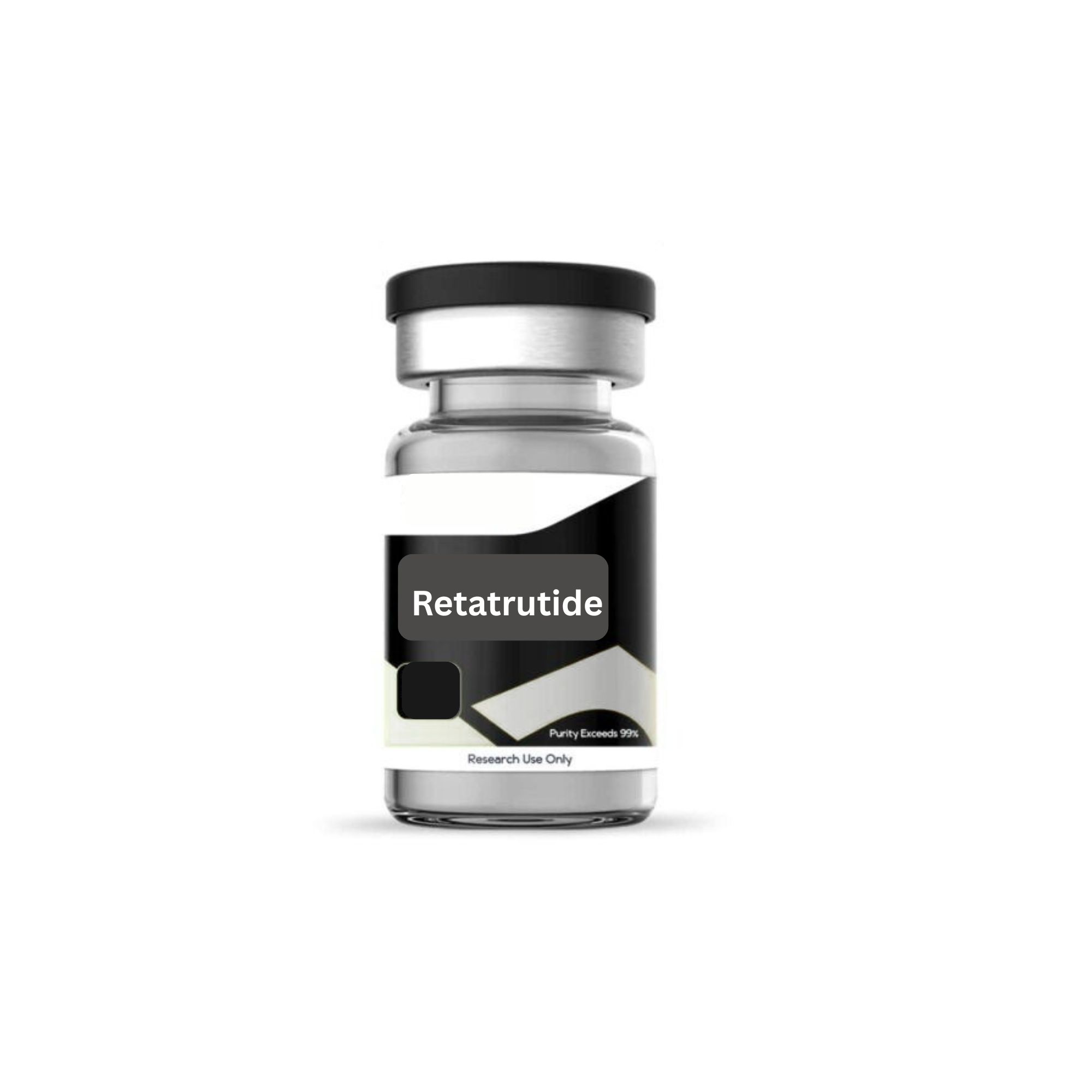
Retatrutide About This Product
Retatrutide is a research-grade multi-agonist compound designed for studies involving metabolic and hormone-related pathways. This retatrutide peptide is engineered to act on three major signaling systems: GIP, GLP-1, and glucagon. It is a valuable tool for exploring how these pathways interact to influence appetite, nutrient handling, and energy balance.
The compound is supplied as a high-purity, lyophilized (freeze-dried) powder in the retatrutide 10 mg vial, allowing stable storage and flexible reconstitution for a range of research uses. Retatrutide has been studied in controlled laboratory settings to investigate glucose regulation, appetite signals, and metabolic responses across different biological models.
Retatrutide Key Features and Benefits
- High-purity retatrutide peptide produced for reliable, reproducible research outcomes
- Lyophilized format supports long-term stability and controlled reconstitution
- Has been studied for its combined activity at GIP, GLP-1, and glucagon receptor pathways
- Useful for modeling nutrient metabolism, appetite regulation, and glucose-related signals
- Quality-controlled manufacturing with lot-to-lot consistency for researchers who buy retatrutide
- Suitable for in vitro and in vivo study designs, depending on protocol
- Stable under frozen storage conditions with minimal degradation
Retatrutide Mechanism & Research Applications
Retatrutide is unique because it activates multiple receptors that play central roles in metabolic regulation. By engaging GIP, GLP-1, and glucagon pathways at the same time, the compound allows researchers to study how these systems work together to regulate appetite control, insulin-related signaling, and overall energy use.
Research has also described a distinct potency pattern across its receptor targets:
- Strong GIP receptor activity (around 8.9× higher than native GIP)
- Moderate GLP-1 receptor activation (about 0.4× relative potency)
- Modest glucagon receptor activity (about 0.3× relative potency)
This balanced profile provides a framework for studying coordinated metabolic responses rather than isolated single-pathway effects. Retatrutide for research is often used to examine full-system interactions involving glucose balance, nutrient absorption, and energy expenditure.
Retatrutide Dosing & Observed Effects in Research
Published studies describe a range of dosing conditions depending on the model and research goals. Data from escalation-based experiments show retatrutide studied at:
- 1 mg, 4 mg, 8 mg, and 12 mg in structured dose-group designs
- Intermediate doses, such as the 10 mg format, used for custom protocols or comparative metabolic studies
Measurements often focus on glucose levels, energy expenditure patterns, nutrient handling, and body-composition-related metrics. All observations are specific to laboratory research and are not interpreted as clinical findings.
Retatrutide Storage, Safety & References
Store the retatrutide vial at –20°C or below in its lyophilized form to preserve stability. After reconstitution, keep refrigerated (2–8°C) and use within the timeframes specified by research protocols. Avoid repeated freeze–thaw cycles.
Researchers should handle this compound under appropriate laboratory conditions by using gloves, sterile tools, and standard chemical-safety procedures. Only trained personnel should work with retatrutide in controlled facilities.
| 10vials/price | 5mg, 10mg, 15mg, 20mg, 30mg, 60mg |
|---|
Be the first to review “Retatrutide”
Related products
Peptide For Sale
Peptide For Sale
Peptide For Sale
Peptide For Sale
Peptide For Sale
Peptide For Sale
Peptide For Sale
Peptide For Sale
Reviews
There are no reviews yet.